
Easy weeknight meals should never mean bland, and this Easy Weeknight Punjabi Chicken Curry proves it! Built on a classic, vibrant onion-tomato gravy with warm Indian spices, it delivers deep, homestyle flavor in a single pot. It is quick, comforting, and so delicious you’ll wonder how something this effortless tastes like it’s been simmering all day!
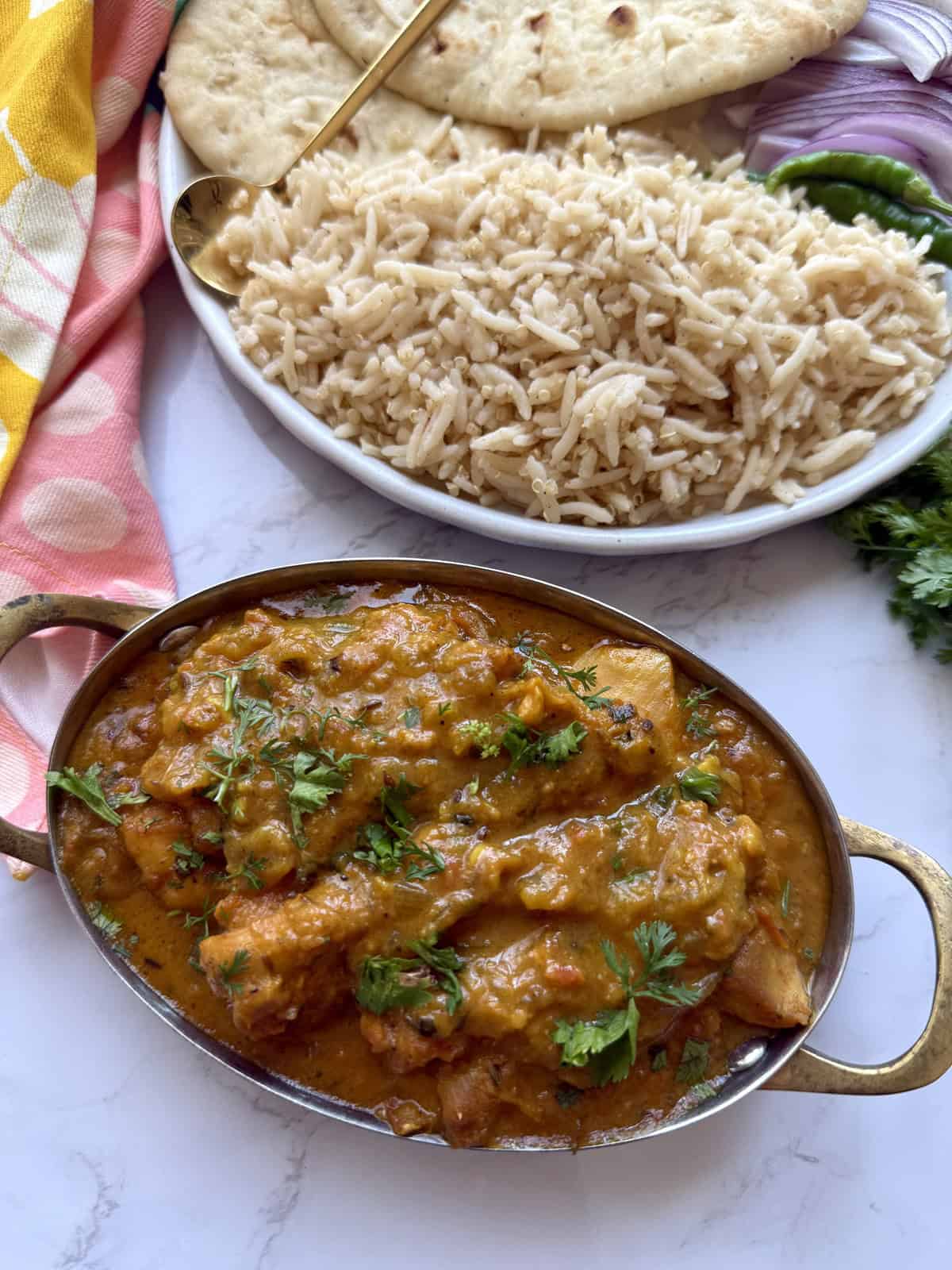
Complex Indian curries often get a reputation for requiring endless ingredient lists, complex techniques, and hours over a hot stove to build depth of flavor. And while we all love a delicious Butter Chicken (my Instant Pot Butter Chicken is a 10/10), sometimes you just need a homey, comforting, wholesome, delicious meal on a busy weeknight.
As a food blogger and recipe developer dedicated to functional, flavor-forward home cooking, I’ve spent a lot of time simplifying traditional Indian techniques into approachable meals for modern kitchens. Today, I’m sharing my ultimate Easy Weeknight Punjabi Chicken Curry, a true homestyle recipe that follows how my dad used to make it and relies on a handful of everyday spices and a classic aromatic base to deliver authentic, comforting flavor in under an hour.
Jump to:
📋Recipe at a glance
- ⏲️Total Time: 45 minutes
- 🌏Cuisine: North Indian / Punjabi
- 👪Yield: 6 servings
- 🥗Dietary Profile: Gluten-Free, High-Protein
- 🍽 Equipment: Heavy-bottomed Saucier or Enamel Cast Iron Pot
Have a question about this recipe? Ask AI!
🔑The 3 Secrets to Success
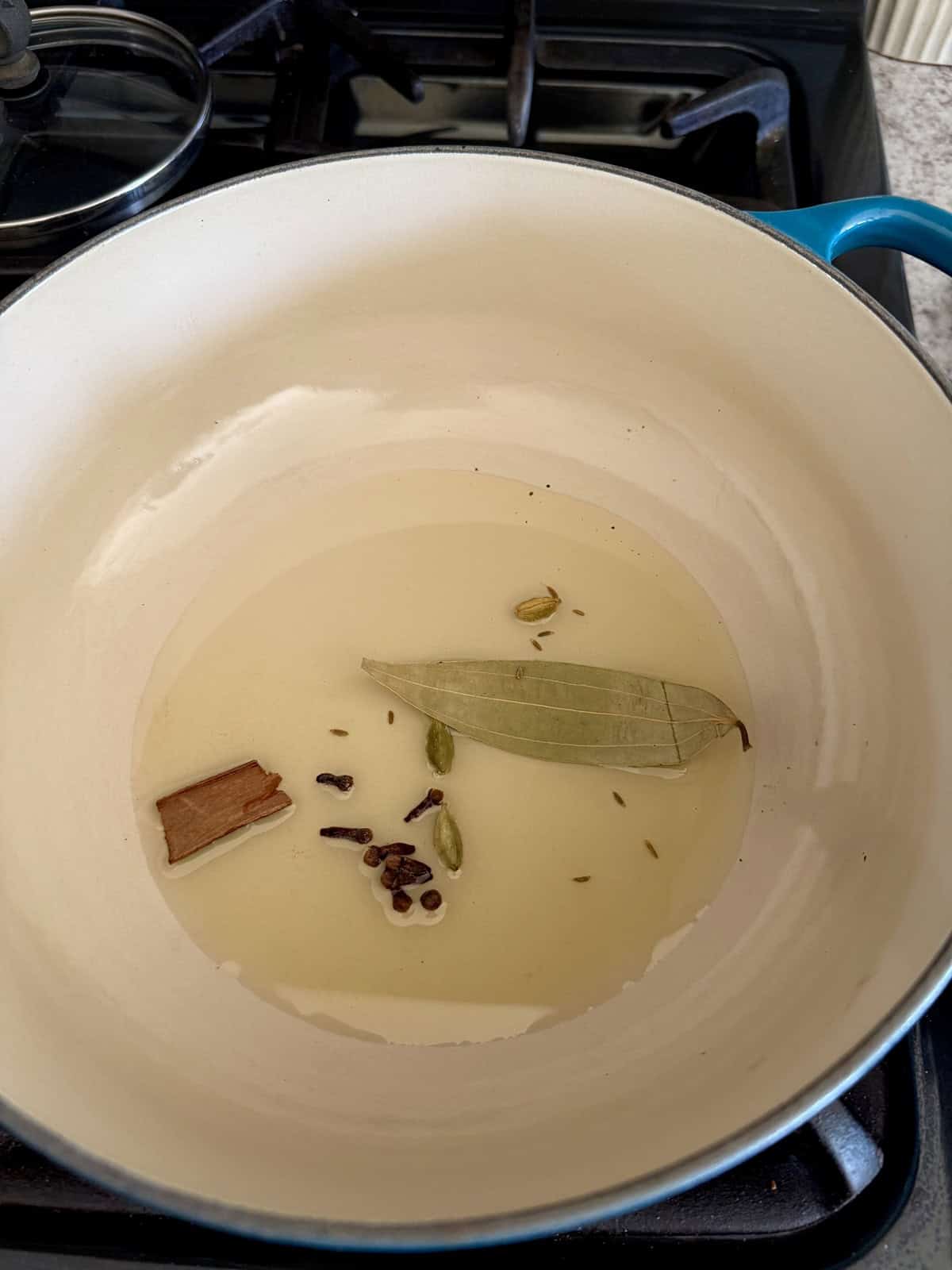
Bloom the spices: Start with a cold pan with oil and whole spices, and then turn on the heat. As the pan and oil warm up, the spices will slowly bloom, releasing their deep aroma and flavor and perfuming the oil.
Patience with the Onions: Browning the onions (bhuno/bhoono) creates a naturally thick, rich gravy without the need for cream or thickeners.
Boneless Thighs for Speed: Though bone-in, "curry-cut" chicken is traditional in this recipe, using boneless, skinless chicken thighs guarantees juicy, tender meat in under 15 minutes of simmer time.
📋Key Ingredients for Simple Punjabi Chicken Curry
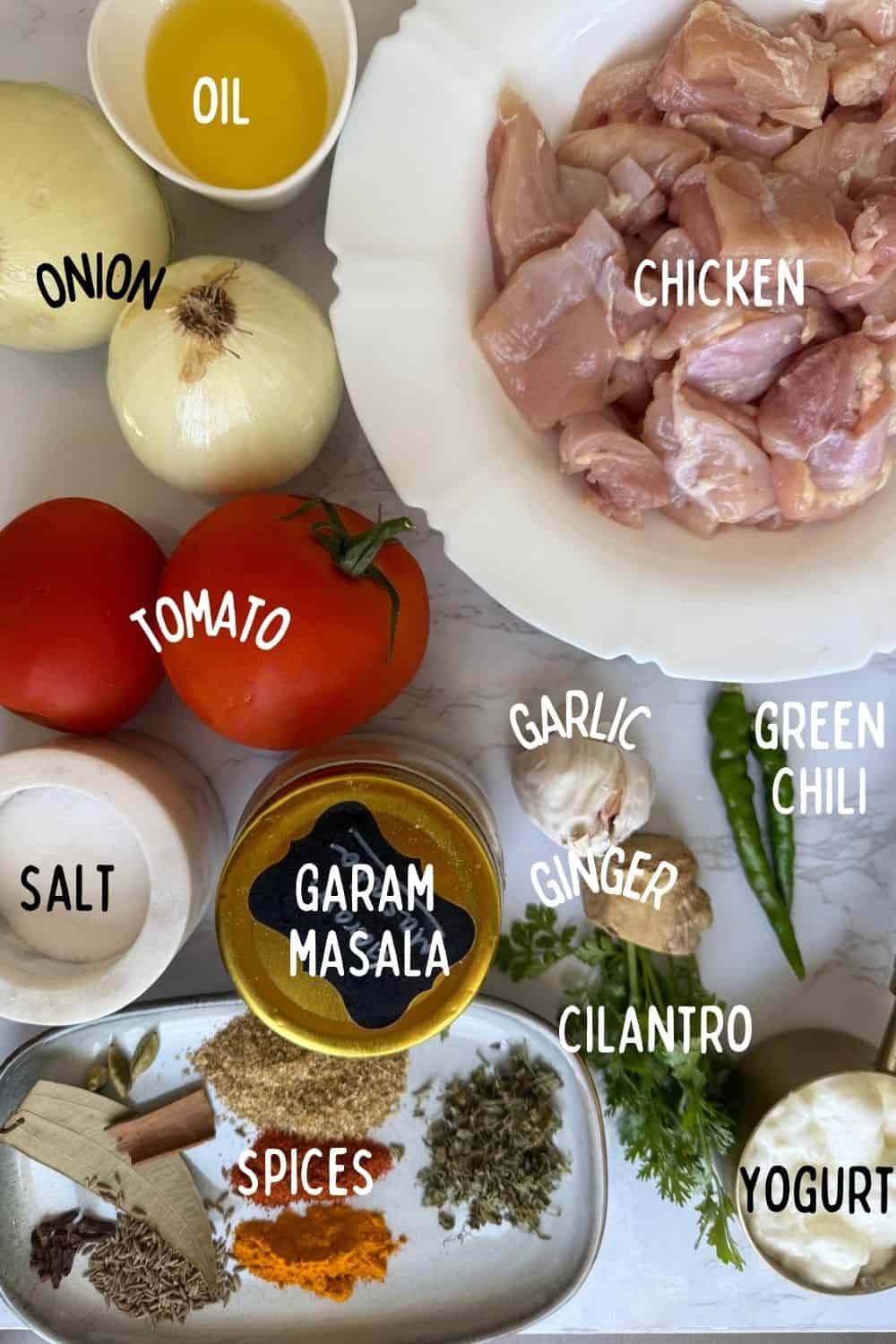
Here's what goes in this Homestyle Chicken Curry Recipe:
- Chicken: I have used boneless, skinless chicken thighs, which stay tender and juicy, but bone-in pieces work seamlessly (just adjust simmer time by 5 minutes).
- Onion, Ginger & Garlic: The holy trinity of Punjabi cooking. I have used finely chopped white onion to keep the rustic feel of the curry. I prefer white onions as the red onions can get very pungent and overpower the taste of the curry. The same goes for coriander chicken or fresh sweet corn curry. Use green chili to add spice to the chicken curry.
- Tomatoes: Use fresh, plump tomatoes and puree them in the blender to add acidity and structure to the curry base. Authentic homestyle chicken curry does not use canned tomato puree.
- Spices: Start with aromatic whole spices like bay leaf, cloves, green cardamom, cinnamon, and cumin seeds. Powdered spices include turmeric, red chili powder (I use cayenne for vibrant color and mild heat), ground coriander, and a final sprinkle of aromatic homemade garam masala and optional kasoori methi.
- Yogurt: Adding yogurt (dahi) to your curry serves a triple purpose: it gently tenderizes the chicken so it stays juicy, while creating a thick, smooth gravy base without the need for heavy cream or nut pastes. Plus, its subtle, refreshing tang perfectly balances warm spices like garam masala.
Don’t be fooled by the short ingredient list! This Punjabi curry is savory, perfectly balanced, and tastes like it’s been simmering on the stove for hours.
Note: If you want to use bone-in chicken, buy a whole chicken and ask the grocery store butcher to "curry-cut" the chicken. It will yield 8-10 pieces.
🍽️ Make It Your Own: Flavor Variations
While chicken is the classic choice, this versatile Punjabi masala base can be adapted to your preference:
- Protein Alternatives: Swap in lamb, shrimp, paneer, or canned chickpeas for an easy variation. See notes in the recipe card for directions.
- Adjust the Spice: Add extra chopped green chilies along with ginger and garlic if you prefer more heat. If making this for kids, you can skip green chilies or use mild peppers like jalapeños. I have used cayenne peppers.
- Richness: Stir in a tablespoon of cream right before adding garam masala.
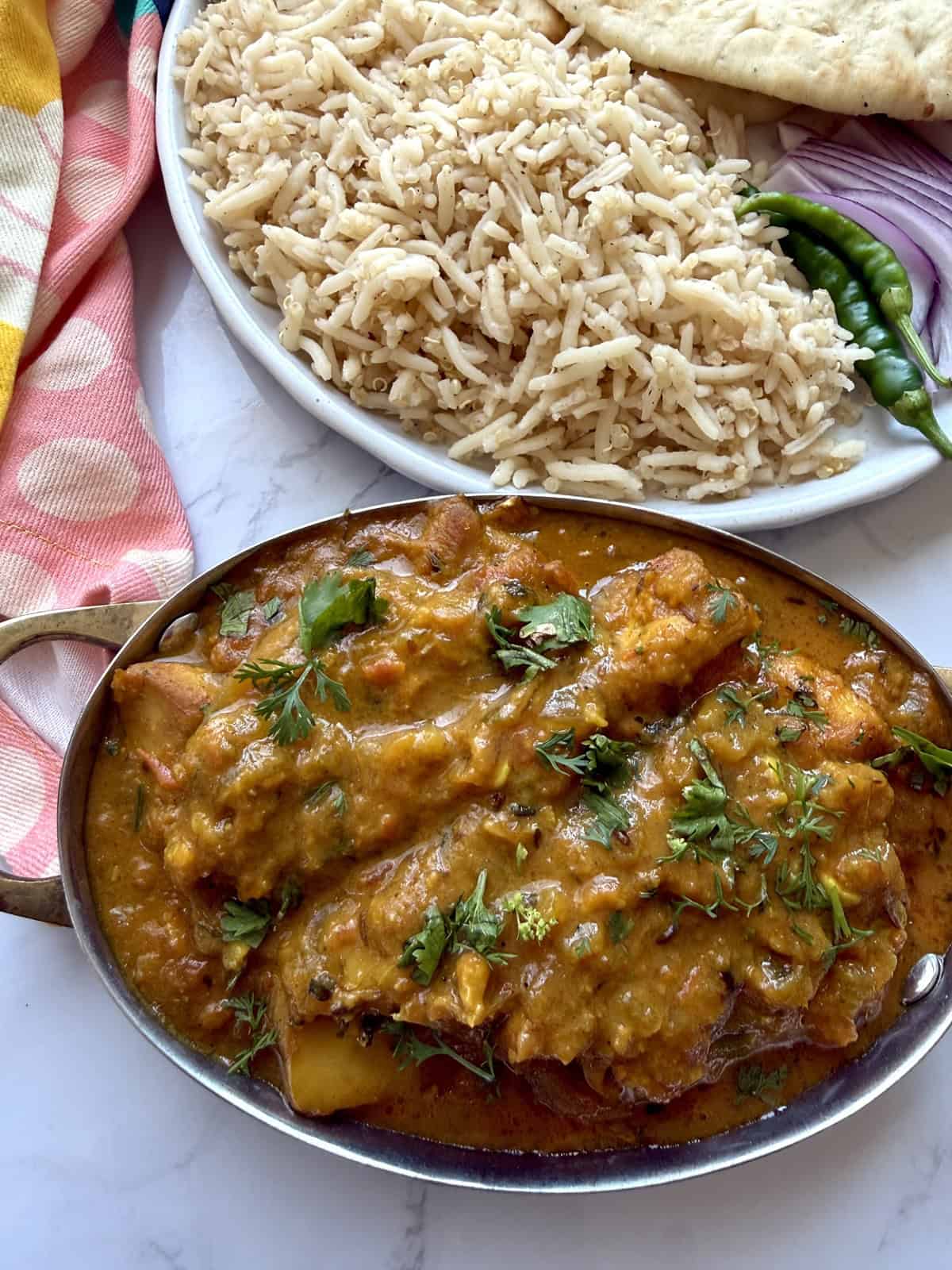
Serving Ideas: Traditionally, this homestyle Punjabi chicken curry is served with rotis (whole wheat flatbreads), homemade dahi, and a salad of red onions and green chilies. You can serve it over basmati rice or paired with a soft homemade garlic naan.
👩🍳Steps to make this recipe
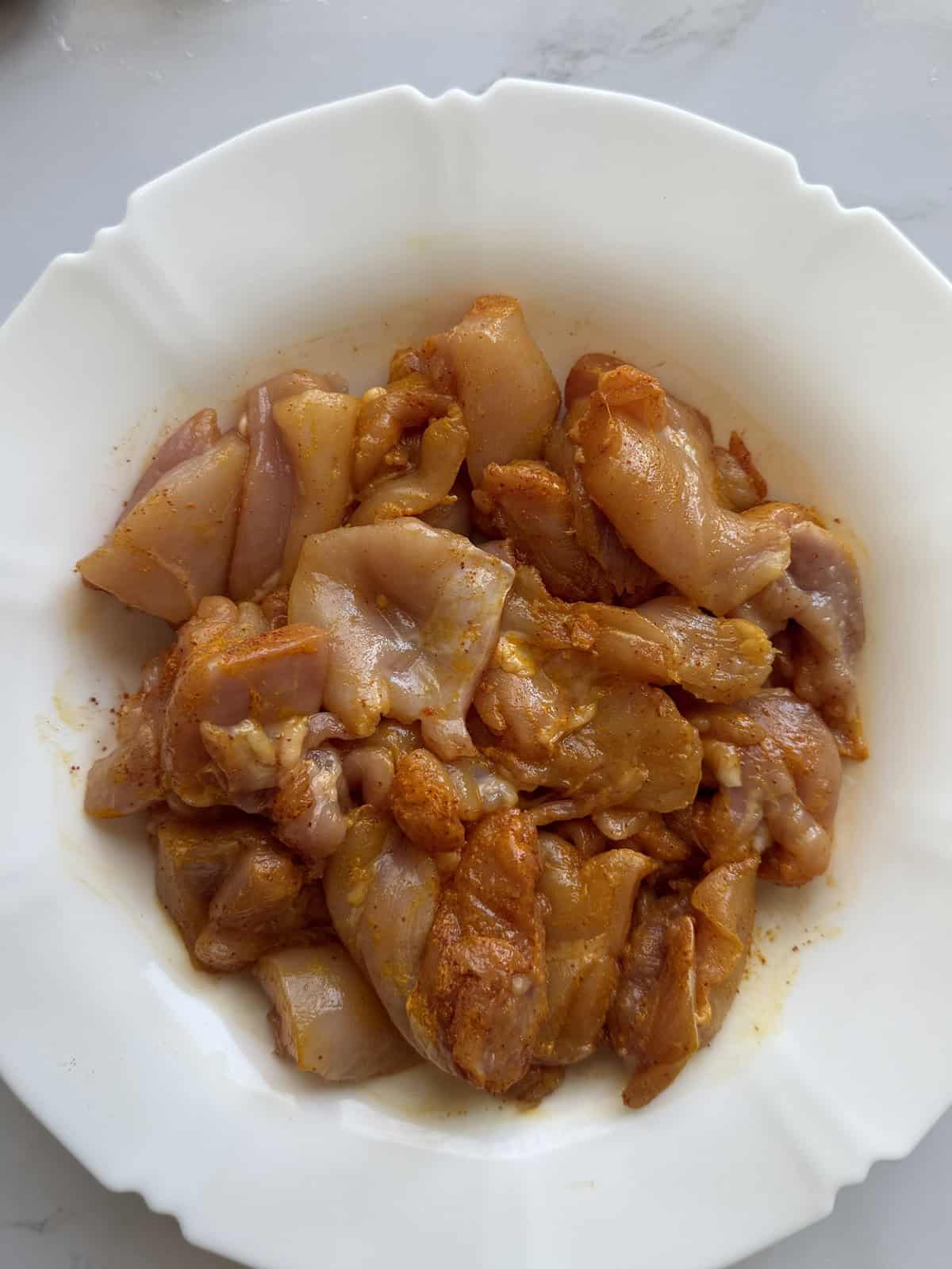
Step 1: Take the yogurt out of the refrigerator. Trim the fat off of your boneless, skinless chicken thighs and cut into bite-sized pieces. I love using kitchen shears for doing this. Sprinkle salt, turmeric powder, and red chili powder on the pieces of chicken, mix, and let them marinate until you add them to the masala for the curry. This marination step is optional but highly recommended. Finely chop the onions.
Step 2: Add oil and whole spices to a heavy-bottomed pan or Dutch oven and set it up on medium-high heat. As the pan heats up, the spices will release their aroma and perfume the oil. Once the oil is hot and shiny, add cumin seeds and wait for them to crackle.
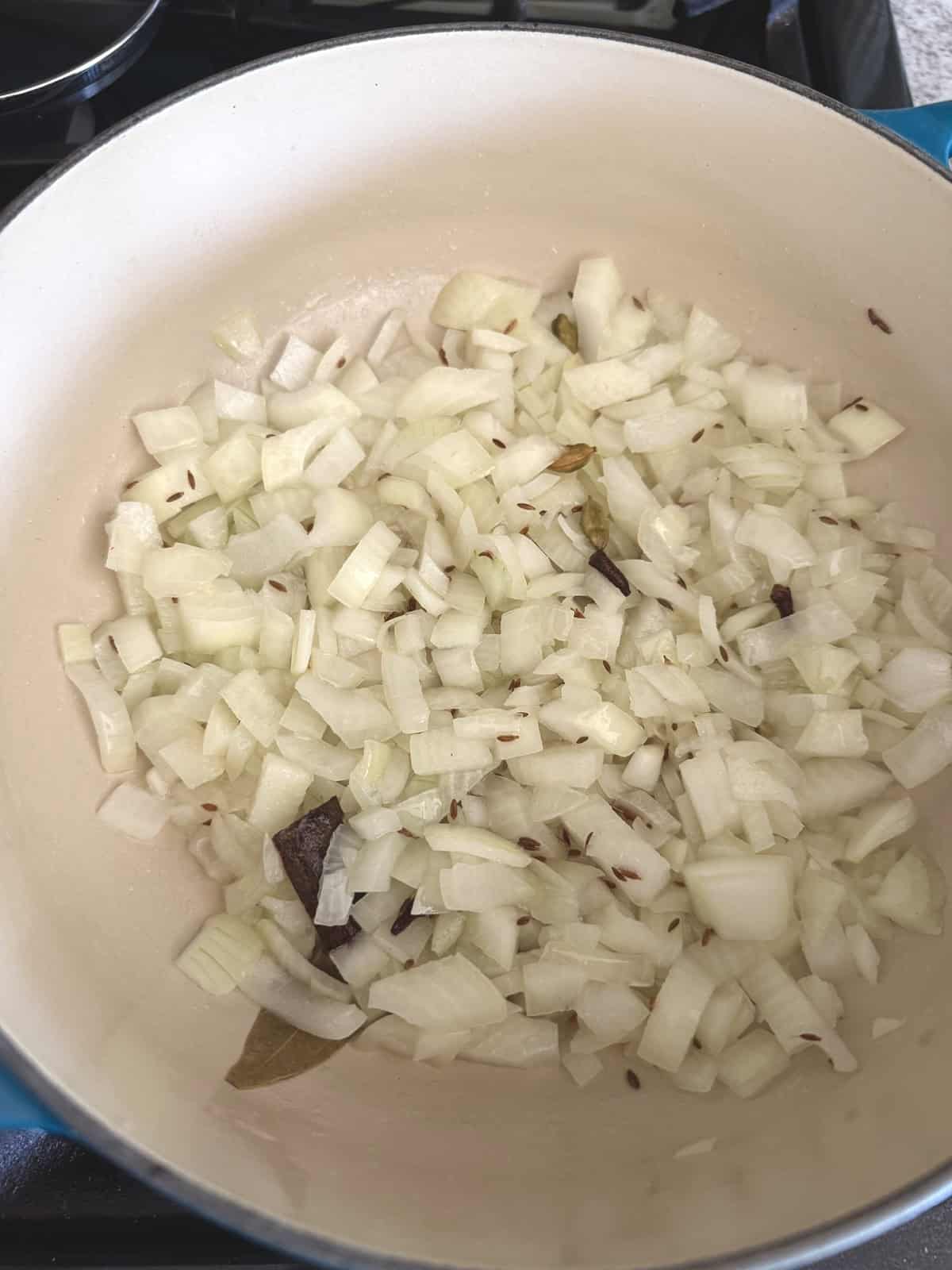
Step 3: Add the chopped onions along with a pinch of salt. Give everything a mix. The salt will help extract the moisture out of the onions an they will cook faster.
Step 4: Cook the onion until browned, about 8-10 minutes. Do not rush this step, as the onions form the base of this curry. If the onions begin to stick to the bottom of the pan, loosen them up with a few drops of water and continue cooking until browned. This is called bhoono and is one of my favorite techniques to add flavor to simple curries.
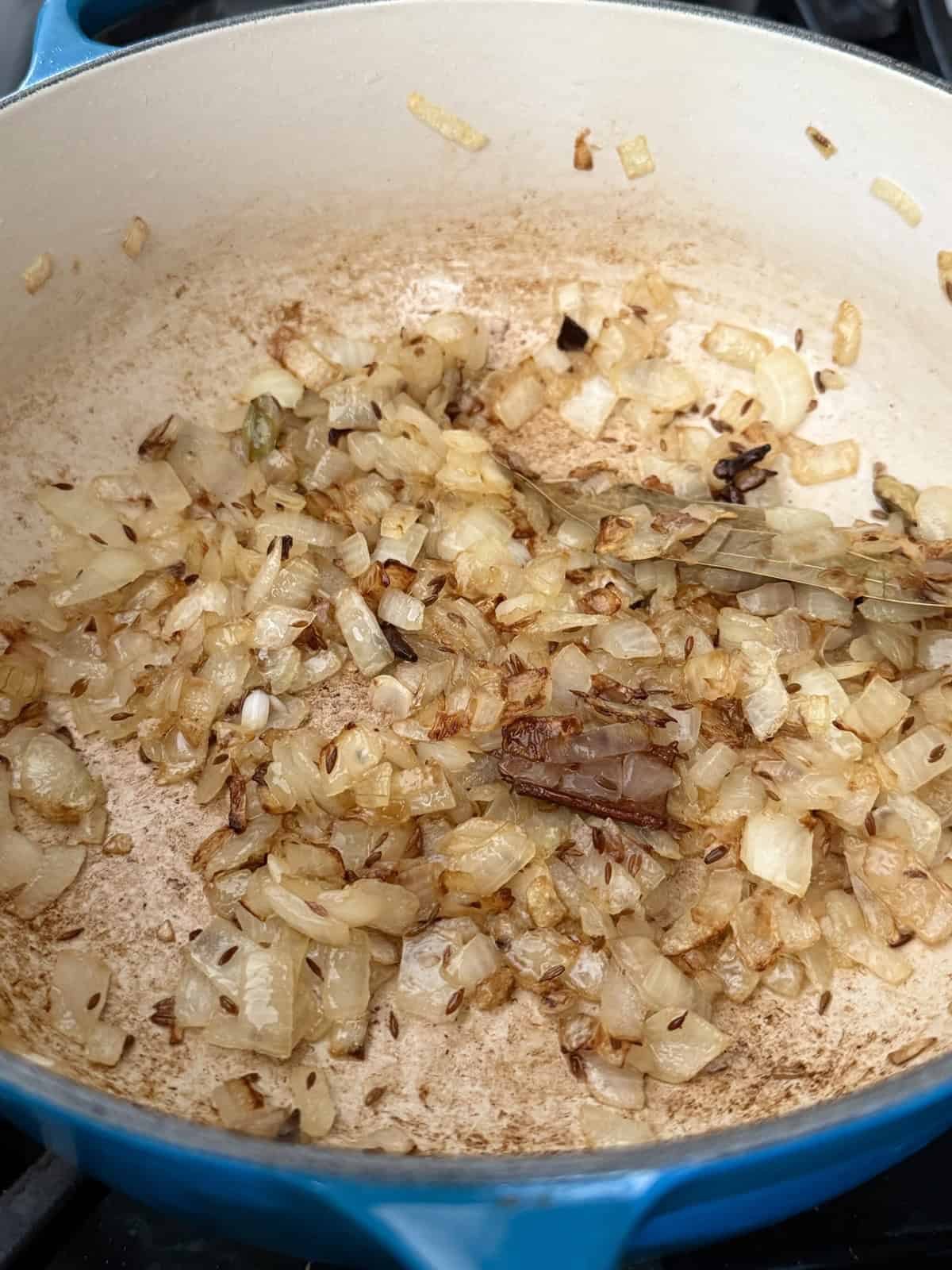
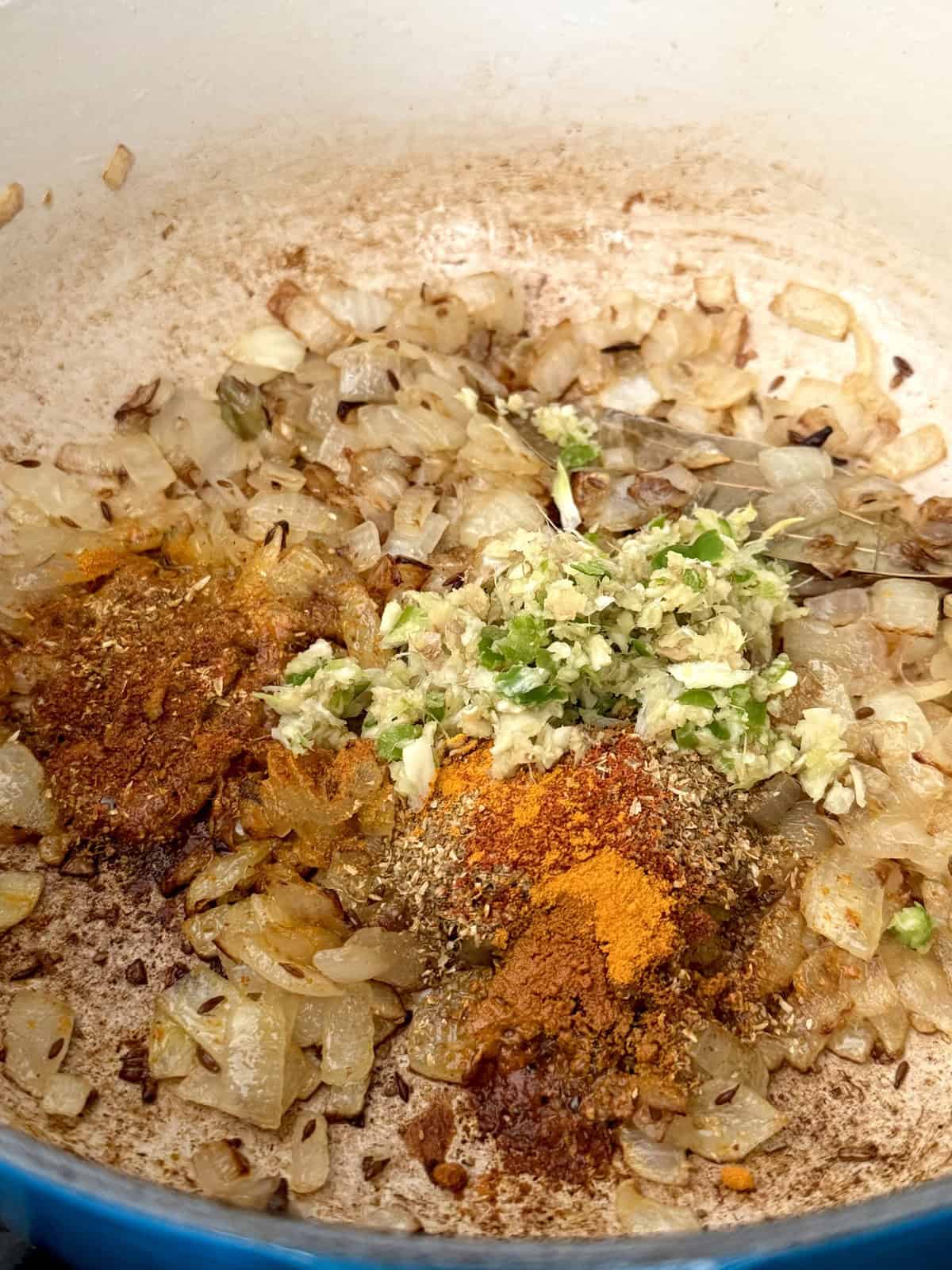
Step 5: After the onions are browned, lower the heat, add turmeric, red chili, and coriander powders along with ginger-garlic paste and green chili (if using). Mix and cook for 2-3 minutes or until the raw smell of ginger garlic goes away. Use the bhoono trick here as well if needed.
Step 6: Increase the heat to medium-high and add the chicken pieces. Give everything a big mix.
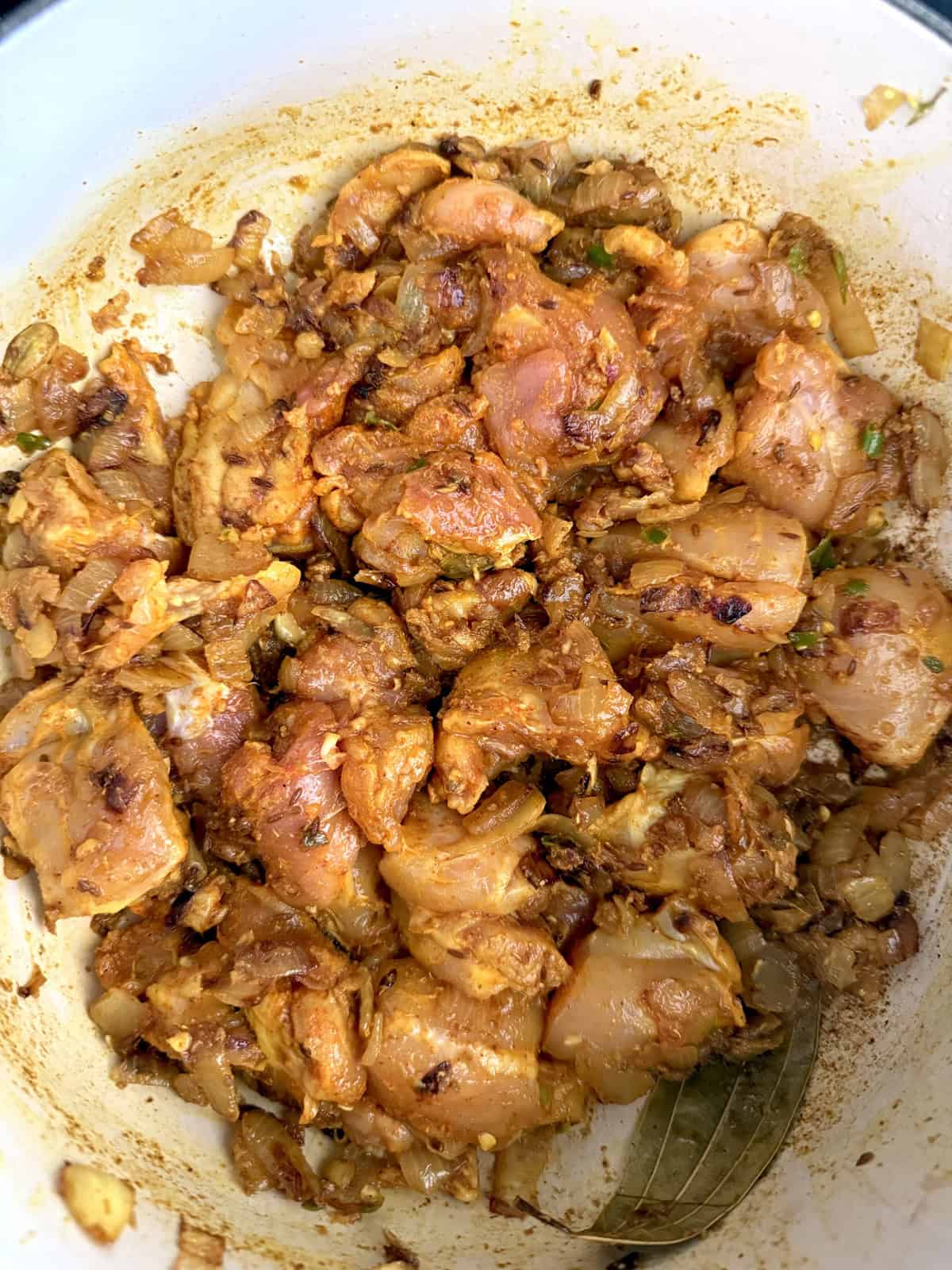
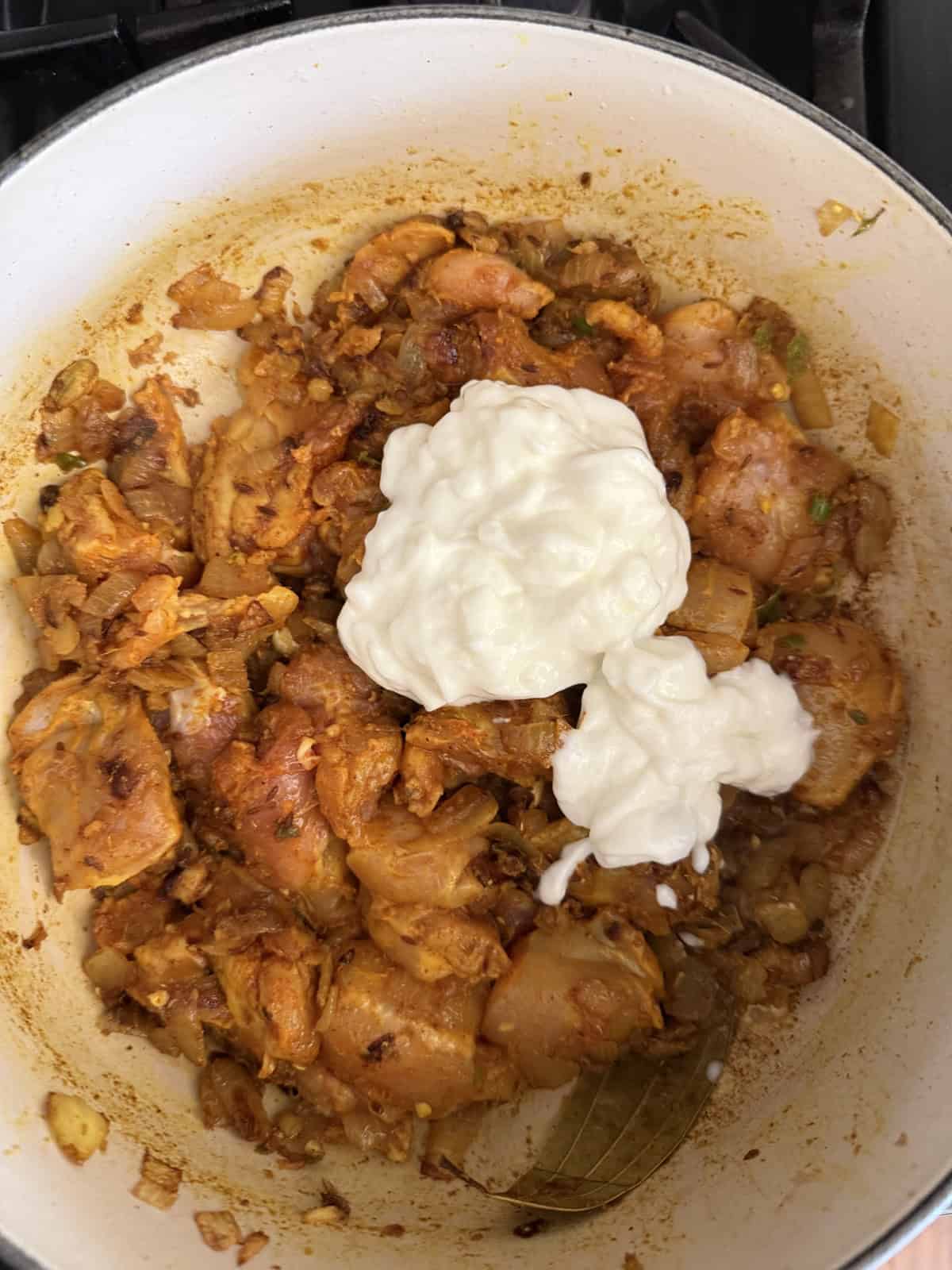
Step 7: Lower the heat and add yogurt while stirring to avoid curdling. If your yogurt is at room temperature, it will likely be OK. Even if it curdles, do not worry and keep stirring.
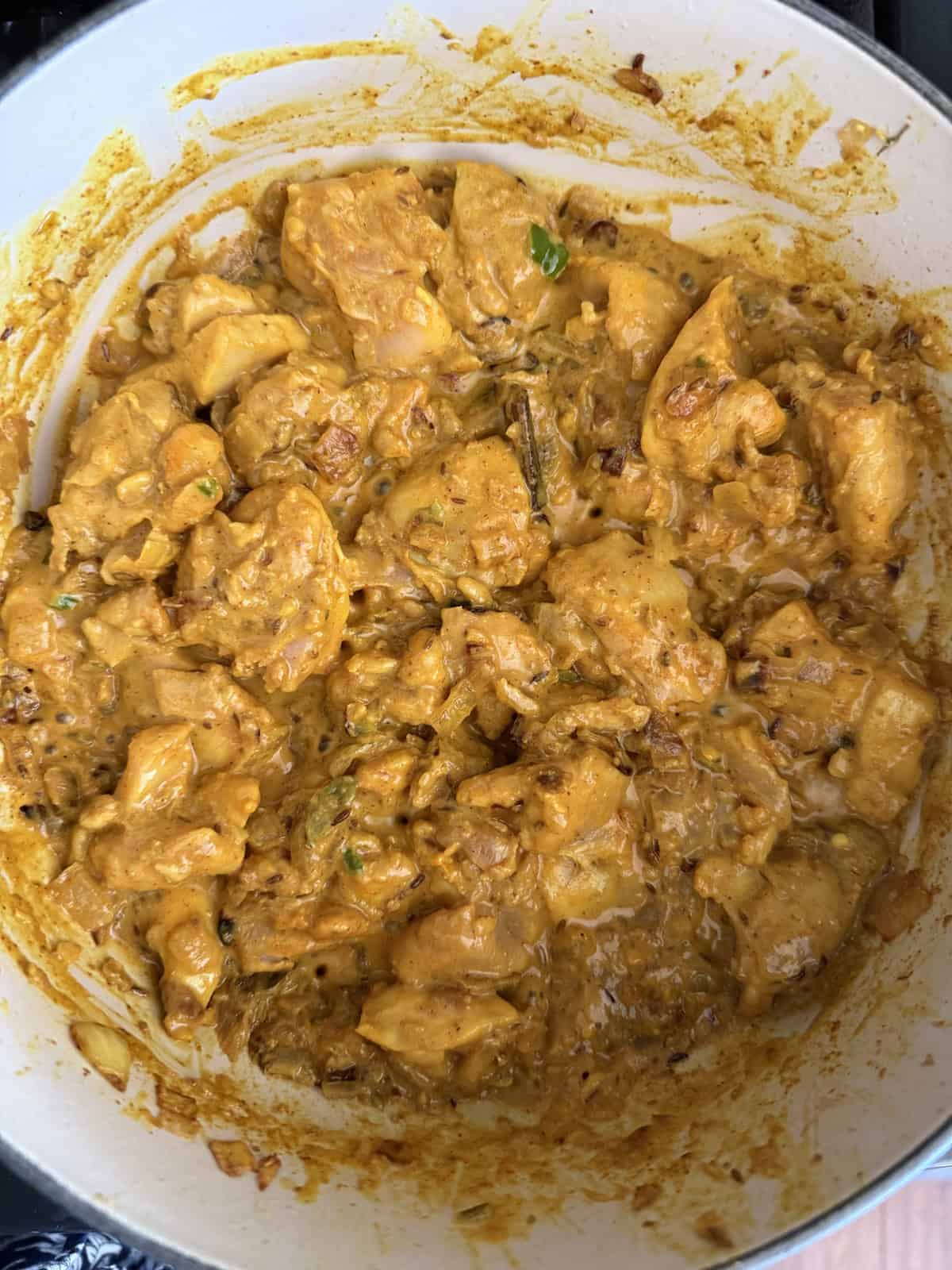
Step 8: Make sure the yogurt is completely mixed with the chicken and the rest of the masala (2-3 minutes). Increase the heat back up to medium-high.
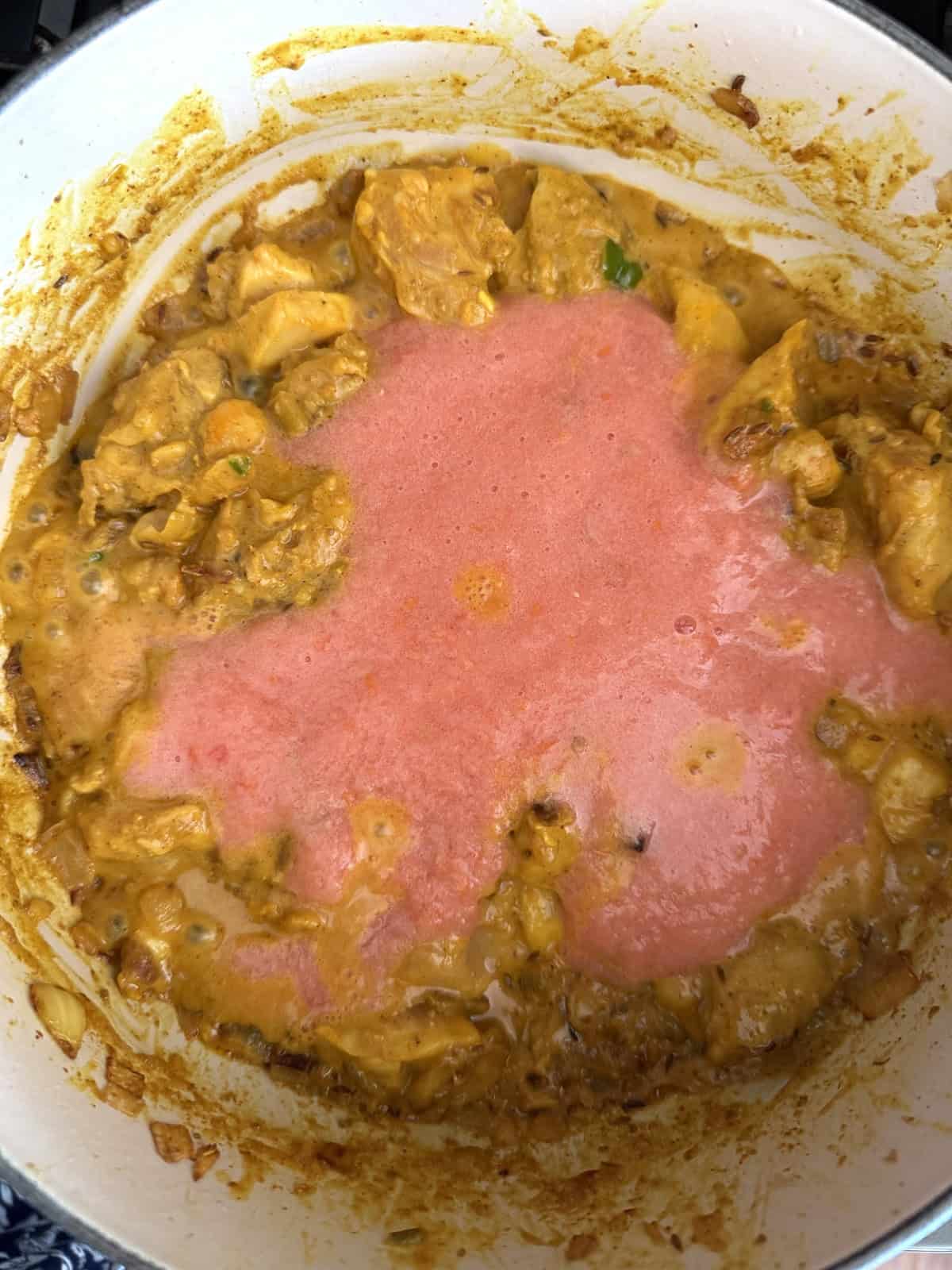
Step 9: Add the pureed tomatoes and salt. Mix, and once the curry comes to a gentle boil, cover the pot with a lid. Lower the heat and cook for 10 minutes.
Note: As the curry cooks, the chicken will release its juices, making the curry saucy. I do not usually add water to this curry, but if you like more sauce, you can add half a cup of hot water at this step.
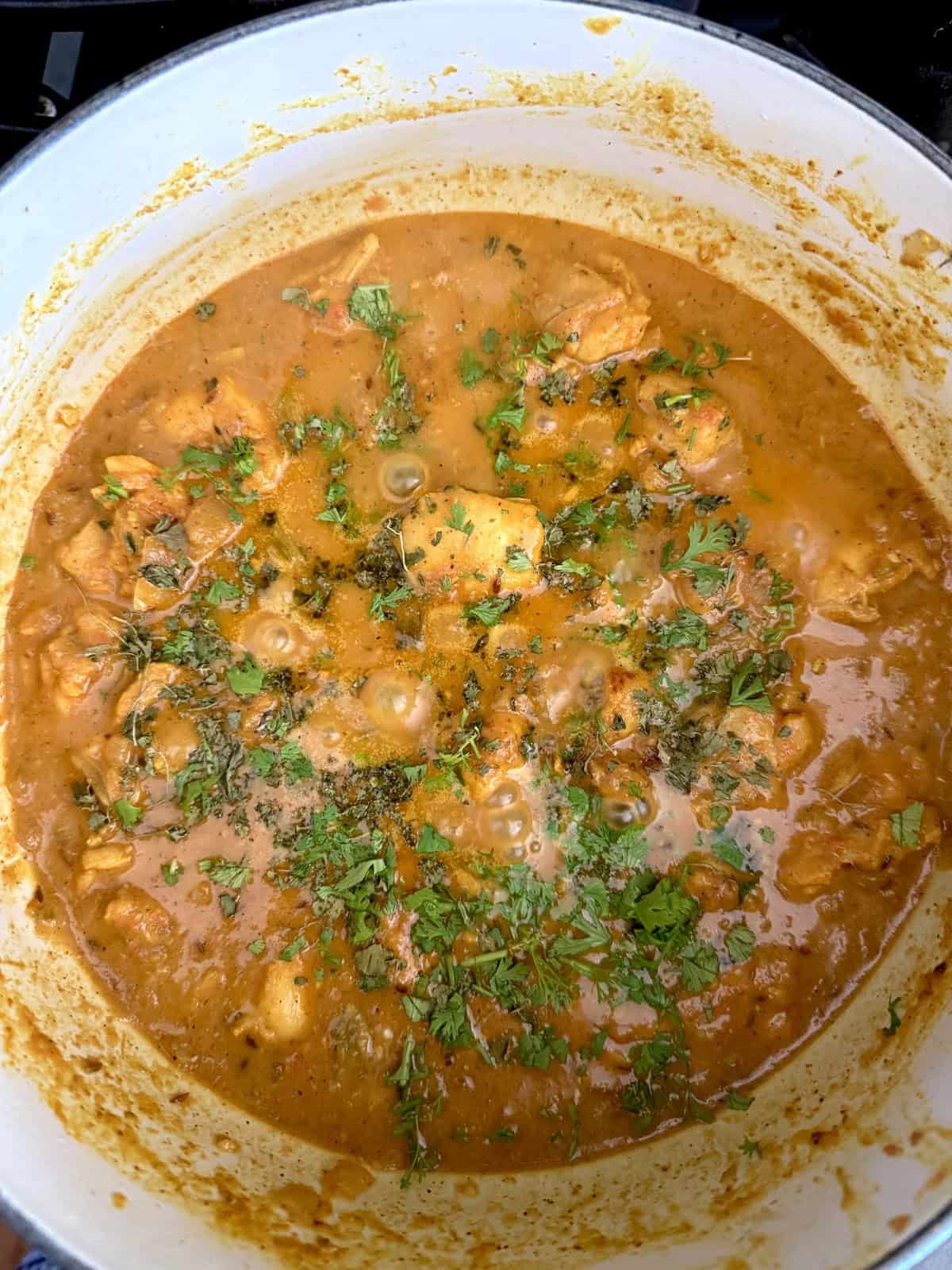
Step 10: After 10 minutes, take the lid off, add garam masala, kasoori methi (if using), and chopped cilantro. Mix and turn the heat off. Taste and adjust salt if needed. Serve with rotis (whole wheat flatbreads), homemade dahi, and a salad of red onions and green chilies. You can also serve it over basmati rice or paired with a soft homemade garlic naan.
💡Vaishali's Tips!
- 🧅Bhoono - Slow cooking the chopped onions for 8-10 minutes is the key to the masala base of this curry. If the onions begin to stick to the bottom of the pan, loosen them up with a few drops of water and continue cooking until browned (bhoono).
- 🥛Yogurt - Make sure to take the yogurt out of the refrigerator before you start with this recipe. This will bring the yogurt to room temperature by the time you add it to the masala. Lower the heat before you add the yogurt and continue stirring to prevent it from curdling.
❓Recipe FAQs
Yes, you can use chicken breasts; but you will have to alter the cooking time. See notes in the recipe card for instructions on how to use chicken breast in this recipe.
This is simple, rustic homestyle curry that can be easily whipped up on a weeknight. It requires no marination time or heavy cream finish.
Yes, skip the yogurt.
If you make this recipe be sure to leave a comment and let me know how you liked it! Share it on Instagram with the hashtag #thekitchendocs or share on Facebook, too.
Love – Vaishali

Easy Weeknight Punjabi Chicken Curry
Equipment
Ingredients
- 1.5 lb boneless skinless chicken thighs
- 2 tablespoon olive oil
- 1 bay leaf
- 4 cloves
- 3 green cardamoms
- 1 in cinnamon stick
- 1 teaspoon cumin seeds
- 0.75 lb white onion chopped fine
- ½ teaspoon turmeric powder
- ½ teaspoon red chili powder or cayenne powder
- 2 teaspoon coriander powder
- 1.5 tablespoon ginger garlic paste
- 1 green chili minced (optional)
- ½ cup yogurt
- 1 cup pureed tomatoes about two tomatoes
- Salt to taste
- ½ teaspoon garam masala
- 1 teaspoon kasoori methi optional
- 2 tablespoon chopped cilantro for garnish
Instructions
- Take the yogurt out of the refrigerator. Trim the fat off of your 1.5 lb boneless skinless chicken thighs and cut into bite-sized pieces. I love using kitchen shears for doing this. Sprinkle salt, turmeric powder, and red chili powder on the chicken pieces, mix, and let them marinate until you add them to the masala for the curry. This marination step is optional but highly recommended. Finely chop the 0.75 lb white onions.
- Add 2 tbsp olive oil and 1 bay leaf, 4 cloves, 3 green cardamoms, and 1 in cinnamon stick to a heavy-bottomed pan or Dutch oven and set it up on medium-high heat. As the pan heats up, the spices will release their aroma and perfume the oil. Once the oil is hot and shiny, add 1 tsp cumin seeds and wait for them to crackle.
- Add the chopped onions along with a pinch of salt. Give everything a mix. The salt will help extract the moisture out of the onions, and they will cook faster.
- Cook the onion until browned, about 8-10 minutes. Do not rush this step, as the onions form the base of this curry. If the onions begin to stick to the bottom of the pan, loosen them up with a few drops of water and continue cooking until browned. This is called bhoono and is one of my favorite techniques to add flavor to simple curries.
- After the onions are browned, lower the heat, add ½ tsp turmeric powder, ½ tsp red chili powder, and 2 tsp coriander powder along with ginger-garlic paste and 1 green chili (minced or finely chopped, if using). Mix and cook for 2-3 minutes or until the raw smell of ginger-garlic goes away. Use the bhoono trick here as well if needed.
- Increase the heat to medium-high and add the chicken pieces. Give everything a big mix.
- Lower the heat and add ½ cup yogurt while stirring to avoid curdling. If your yogurt is at room temperature, it will likely be OK. Even if it curdles, do not worry and keep stirring.
- Make sure the yogurt is completely mixed with the chicken and the rest of the masala (2-3 minutes). Increase the heat back up to medium-high.
- Add the 1 cup pureed tomatoes and Salt. Mix, and once the curry comes to a gentle boil, cover the pot with a lid. Lower the heat and cook for 10 minutes.
- After 10 minutes, take the lid off, add ½ tsp garam masala, 1 tsp kasoori methi (if using), and 2 tbsp chopped cilantro. Mix and turn the heat off. Taste and adjust salt if needed. Serve with rotis (whole wheat flatbreads), homemade dahi, and a salad of red onions and green chilies. You can also serve it over basmati rice or paired with a soft homemade garlic naan.
Notes
- Bone-in Chicken: If you want to use bone-in chicken, buy a whole chicken and ask the grocery store butcher to "curry-cut" the chicken. It will yield 8-10 pieces.
- Chicken Breast: If using breasts, toss the cubed meat with a pinch of turmeric, salt, and red chili powder. Quickly sear the pieces in warm oil until lightly browned, then transfer them to a plate (they don't need to cook all the way through yet). Build your masala base as directed, then stir the chicken back in during the final 5 minutes of simmering so it stays moist and tender.
- Shrimp or Fish: Follow the same method as chicken breast—sear quickly first, set aside, and gently fold them back into the simmering gravy for the last 3–4 minutes until just cooked through.
- Lamb: For quick-cooking cuts, dice into bite-sized pieces and follow the chicken breast technique. For tougher stewing cuts, increase the water slightly and simmer covered on low heat until fork-tender.
- Vegetables: Sturdy veggies like potatoes, cauliflower florets, paneer or green peas (matar) can be simmered directly in the sauce.



Leave a Reply