
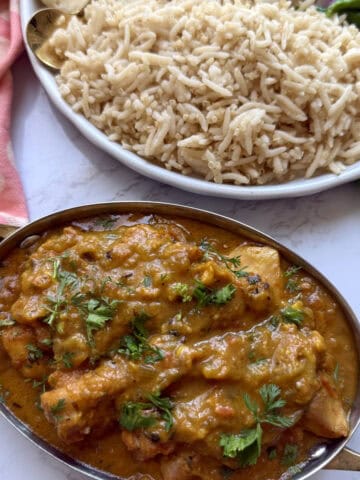
This coriander chicken curry, also known as dhaniya murgh or cilantro chicken curry, is one of the most uniquely flavored Indian chicken recipes you will ever make. Inspired by the Bengali tradition of cooking with panch phoran (a five-spice whole-spice blend) and mustard oil, this easy weeknight curry has a depth and complexity that set it completely apart from every other chicken curry in your rotation. A blended coriander-tomato paste, a hint of caramelized sugar, and a sear that locks every bit of flavor into the chicken, this is the recipe that reader Alex called "the first curry I've made that tastes genuinely authentic." I hope it becomes that recipe for you too!

Jump to:
- 📋 Recipe at a Glance
- ✨Why you'll love this recipe?
- 📋Recipe Ingredients
- 📖Substitutions, Additions and Variations
- 👩🍳Steps to make this recipe
- 💡Vaishali's Tips!
- 🍽️ What to Serve With Coriander Chicken Curry
- 🍲My favorite dutch oven
- 🫙Storage, freezing, and reheating instructions
- 💭 What Else Can I Make With These Ingredients?
- ❓FAQs
- 👇Related
- Easy Coriander Chicken Recipe (Indian Dhaniya Chicken)
📋 Recipe at a Glance
- 🎯 Difficulty - Easy - one pot and standard curry technique
- ⏱ Time - 1 hr 10 min (including marination)
- 🌿 Diet - Nut-Free, Vegetarian, High-Protein, Gluten-Free
- 🥘 Method - No-Bake / Freeze
- 🫙 Equipment - Mixing bowl, whisk, quarter-sheet baking pan, parchment paper
- 👨👩👧 Servings - 4
- 💪 Protein - 23g protein per serving
- ❄️ Meal Prep - Yes, tastes better next day and keeps in the freezer for up to 1 month
Have a question about this recipe? Ask AI!
Dhaniya chicken literally translates to coriander (or cilantro) chicken. It is a delicious chicken curry with sweet-and-sour undertones. I remember having this chicken at a friend’s house, and I have based my recipe for coriander chicken on what my taste buds recall.
The addition of panch phoran, a traditional Bengali mix of five whole spices - fenugreek seeds, fennel seeds, mustard seeds, nigella seeds, and cumin, adds a unique flavor. I have used caraway seeds, or ajwain, instead of cumin because they add more flavor to this recipe (in my opinion). Ajwain is also a great digestive agent. Lots of fresh coriander (cilantro) is, of course, the star of this dish made with masala of onions and tomatoes.
Some of my other Indian chicken dishes are Afghani Chicken, butter chicken, and masala chicken burgers. Along with these, I make this dhania chicken regularly. This easy coriander chicken curry or dhaniya chicken recipe is best enjoyed with some Indian cumin or jeera rice, fluffy basmati rice, or rotis. You can also serve it as a stew.
✨Why you'll love this recipe?
- 🤤A unique taste - the combination of five different spices with lots of coriander gives this chicken curry a unique taste that is unlike any other curry that you will ever have.
- 👌Easy recipe - once you pull together all the ingredients, it comes together rather easily and is fuss-free.
- ⭐ Panch phoran + caramelized sugar = Bengali magic: The Bengali technique of blooming whole panch phoran spices then caramelizing sugar in the same pan creates a flavor base with sweet, spiced, slightly smoky depth that no curry powder can replicate.
- 💚 Genuinely healthy without tasting like it: No cream, no butter, no heavy masala base with cashews - just chicken, fresh cilantro, tomatoes, and panch phoran. 213 calories per serving with 23g of protein.
- ❄️Leftovers - the leftovers taste incredible, with the flavors deepening as the curry sits. This is an ideal meal prep curry - make it Sunday, eat it all week.
📋Recipe Ingredients

- Chicken - I use boneless, skinless chicken thighs. Dark meat works great in Indian curries.
- Panch Phoran Spice Mix - the 5 spice Bengali blend. You can buy panch phoran online or mix your own.
What is Panch Phoran — and Why Does It Make This Curry Special?
Panch phoran (also spelled panch phoron or panch poran) is the signature five-spice whole seed blend of Bengali cooking. "Panch" means five, and "phoran" means spice, and the five seeds are always used whole, never ground. In the traditional blend: fenugreek seeds (methi), fennel seeds (saunf), mustard seeds (rai), nigella seeds (kalonji), and cumin seeds (jeera) in equal parts.
In this recipe, I have used caraway seeds (ajwain) to replace cumin, making the blend even more digestive-friendly (ajwain is a well-known digestive aid in the Ayurvedic tradition).
When panch phoran hits hot oil, it releases the seeds' essential oils all at once, creating an aromatic burst you cannot achieve with ground spices.
- Ginger Garlic Paste - I use homemade ginger garlic paste but you can either buy ginger garlic paste online or at most grocery stores.
- Fresh Cilantro - or coriander (aka as dhania/dhaniya) is an absolute must for this recipe.
- Mustard Oil—I highly recommend using mustard oil in this recipe since it adds that characteristic, slightly pungent, but mostly aromatic note.
Don't forget to check out the recipe card below for a complete list of ingredients along with the quantities.
📖Substitutions, Additions and Variations
- Chicken - you can use boneless, skinless chicken breasts in this recipe though I do recommend thighs. You can also use chicken legs or other bone-in cuts and adjust the cooking time accordingly.
- Oil - mustard oil is traditionally used in this recipe, but you can use any other neutral or mild-tasting oil of your choice. I do not recommend using coconut oil.
- Vegetarian - you can use paneer (my homemade paneer)instead of chicken in this recipe. There is no need to marinate and sear the paneer.
👩🍳Steps to make this recipe
Step 1: Trim any fat from the boneless, skinless chicken thighs and marinate them (store in the refrigerator) in ginger-garlic paste, green chili paste, and lemon juice (Image 1) for at least 30 minutes and up to a day. While the chicken is marinating, chop the onions and blend the tomatoes and cilantro into a paste in a blender. Set aside.
Step 2: Set a heavy-bottomed pan or Dutch oven on medium-high heat and add mustard oil. Heat it to the smoke point and turn off the heat. Once the smoke has died down, add the marinated chicken pieces (Image 2).
💡 Why do you heat mustard oil to the smoke point?
Raw mustard oil contains a compound that gives mustard its sharp, pungent bite. Heating the oil to its smoke point (around 480°F /250°C) breaks down this compound, removing the bitterness and leaving behind the oil's signature deep, nutty, aromatic flavor. This is cooking science - it is not about the temperature alone, but about the chemical transformation of the oil
that makes it taste completely different from when it went in the pan.


Step 3: Turn the heat back on medium and sear the chicken for about 3 minutes on each side (Image 3). Transfer the chicken to a bowl, cover, and set aside.
Step 4: Add the panch phoran spice mix (Image 4) to the same pan. As the seeds start to splutter, move them to one edge of the pan. Add sugar to the other side of the pan and let it caramelize for about a minute.


Step 5: Now add the chopped onions. Add turmeric and a pinch of salt (Image 5) and cook till onions turn light golden, about 5 minutes. Scrape any bits of chicken that are sticking to the bottom of the pan and mix them with the onions.
Step 6: To the browned onions, add the blended tomato and cilantro paste (Image 6).


Step 7: Mix everything together (Image 7) and let the paste cook on medium low heat for 7-8 minutes. This is called "bhoono," or cooking the masala until the moisture evaporates and everything is nicely toasted.
💡 What is bhoono — and why does it matter?
"Bhoono" (also spelled bhuno or bhuna) is one of my favorite cooking techniques that I learned from my mom. You can think of it as a way to fry or to roast in a dry, concentrated way, with minimal oil. When you bhoono a masala, you cook it past the point where it is simply
cooked through - you are actually driving off all the moisture, concentrating the flavors, and gently toasting the spices.
The visual cue is tiny droplets of oil appearing at the edges of the masala and the paste pulling away from the sides of the pan, this tells you the water has fully evaporated and the masala is "bhoonoed". There are several recipes on my website where I use the bhoono technique - kala chana recipe, Weeknight Punjabi Chicken Curry, rajma (red kidney beans), keema pav, and others. A bhoonoed masala is the difference between a curry that tastes cooked and one that tastes developed. Never rush the bhoono step!!!
Step 8: While the masala is bhoonoing, cut the chicken into bite-size pieces and return it to the bowl with all the juices. After the masala is cooked, tiny droplets of oil appear on the sides, and all the moisture has evaporated (Image 8).


Step 9: Add the chopped chicken to the masala, turn the heat up to medium high, add salt and give everything a big mix (Image 9).
Step 10: Add about half a cup of water, bring the curry to a boil (Image 10), and reduce heat to low. Cover the pan and cook until the chicken is done about 8 minutes. After 8 minutes, check the seasoning and serve the coriander chicken curry warm with jeera rice, plain basmati rice or rotis!


💡Vaishali's Tips!
- Marination: Don't skip marinating the chicken. It is highly recommended. If you have time, you can marinate the chicken the morning of or the night before when you are planning to make this coriander chicken curry.
- Sugar: That 1 teaspoon of sugar adds a slightly sweet touch which is a very important flavor component of this dish.
- Searing the chicken: Searing locks in the marinade flavor and seals the moisture in the chicken. Letting it rest before cutting always makes for a juicier chicken.
- Browned bits: If there are chicken bits sticking to the bottom of your pan after searing the chicken, don't worry and scrape them when you add the onions. These bits will add a lot of flavor to the masala. The moisture from the onions should be enough to loosen the bits or you can also splash in some drops of water.

🍽️ What to Serve With Coriander Chicken Curry
- 🍚 Cumin Basmati Rice: My Jeera Rice / Cumin Basmati Rice is the absolute classic pairing, the fluffy rice soaks up every drop of the cilantro gravy.
- 🫓 Roti or Phulka: My Whole Wheat Roti is perfect for scooping, and every bite is better than the last. The thin, soft texture is ideal for a curry with this much gravy.
- 🌾 Basmati Quinoa: For a higher-protein weeknight bowl, serve over my [Basmati Rice and Quinoa] blend, I promise you won't even be able to tell that there's quinoa hidden in that bowl.
- 🥗 Simple Raita: A cool cucumber or boondi raita on the side balances the warmth of the panch phoran spices and makes the whole meal feel complete.

the best!
🍲My favorite dutch oven
My Le Creuset Dutch oven is my go-to pan for this coriander chicken curry recipe because it distributes the heat beautifully, and the chicken cooks evenly and stays moist and juicy.
🫙Storage, freezing, and reheating instructions
- Store: This coriander chicken curry typically stays fresh in the fridge for 2-3 days.
- Freeze: For longer storage, you can freeze it in a air tight freezer safe container or freezer ziptop bag. It will last up to 1 month in the freezer and still taste great even after a month.
- Reheat: Any leftovers can be reheated in the microwave or a small saucepan.
💭 What Else Can I Make With These Ingredients?
- 🫚Panch phoran: You can use it to spice up any curry with traditional Bengali flair. I also use it in my tomato ginger and date chutney, which is delicious by the way!
- 🌿 Leftover fresh cilantro: There are likely more than a hundred recipes on my website that use cilantro for garnish. But if you have a lot left, make a batch of my mint cilantro chutney and stick it in the fridge. You can also wash, chop, and freeze the cilantro, then use it later for cooking and garnishing. Works like a charm!!
- 🍗 Extra chicken thighs: Try my Afghani Chicken Without Cashews for a completely different flavor profile - same cut, same ease, totally different result. Or my Instant Pot Butter Chicken for a crowd-pleasing weeknight classic.
- 🧄 Leftover ginger-garlic paste: I use it all the time!! In my easy butter garlic mushrooms recipe, kala chana recipe, palak paneer, weeknight punjabi chicken curry, and so much more! It keeps in the fridge for 2 weeks and halves the prep time for every Indian recipe.
❓FAQs
Panch phoran is a Bengali five-spice whole seed blend made from equal parts fenugreek seeds, fennel seeds, mustard seeds, nigella seeds (kalonji), and cumin. In this recipe, I have used caraway seeds (ajwain) in place of cumin for extra digestive benefit. It is usually added to the oil at the beginning of a recipe and has a beautiful, floral and anise/fennel-forward aroma with earthy, peppery undertones that is the defining flavor signature of Bengali cooking. You can buy it pre-mixed at any Indian grocery store or online.
I love mustard oil! It is the traditional cooking oil of Bengal and is also widely used in Punjabi cooking. It has a pungent, slightly sharp aroma that mellows dramatically once heated to its smoke point, leaving behind a nutty, distinctive flavor that neutral oils simply cannot replicate. Heating mustard oil to its smoke point before adding the chicken is non-negotiable, as it removes the oil's raw bitterness. You can substitute a neutral oil, but the flavor will be noticeably different.
Absolutely! Using boneless skinless thighs is just my preference. Many Bengali home cooks prefer bone-in chicken for this curry because the bones add body and flavor to the masala. Use skinless chicken thighs or drumsticks and increase the simmering time in Step 8 from 8 minutes to 20–25 minutes on medium-low heat, checking that the meat pulls easily from the bone. The rich collagen from the bones makes the gravy even silkier and more flavorful than the boneless version.
👇Related
Looking for other recipes like this? Try these:


If you make this recipe be sure to leave a comment and let me know how you liked it! Share it on Instagram with the hashtag #thekitchendocs or share on Facebook, too.
Love – Vaishali

Easy Coriander Chicken Recipe (Indian Dhaniya Chicken)
Equipment
Ingredients
Chicken Marinade
- 1 lb Boneless Skinless Chicken Thighs
- 1 tablespoon Ginger Garlic Paste
- 1 Teaspoon Green Chili Paste optional
- 1 Tablespoon Lemon juice
Grind to a paste
- 1 Cup Chopped Coriander/Cilantro Greens Stems and Leaves + more for garnish
- 2 Tomatoes about ½ lb
Panch Phoren:
- ½ Teaspoon each Mustard seeds, Nigella seeds (Kalaunji), Fenugreek seeds (Methe), Carraway seeds (Ajwain), Fennel seeds (saunf)
Other Ingredients
- 1 White Onion Chopped
- ½ Teaspoon Turmeric powder
- 1 Teaspoon Sugar
- 1.5 Tablespoon Mustard Oil preferably
- Salt To taste
- ½ Cup Water or as needed
Instructions
- Marinate the chicken in marinade ingredients for at least 30 minutes. The longer the better. While the chicken is marinating, chop the onion and blend the cilantro and tomatoes to a paste.
- Set a heavy-bottomed pan or Dutch oven on medium-high heat and add mustard oil. Heat the oil to the smoke point and turn off the heat. Once the smoke has died down, add the marinated chicken.
- Turn the heat back on to medium and sear the chicken for about 3 minutes on each side. Transfer the chicken to a bowl, cover, and set aside.
- Turn the heat to low and add the panch phoran spice mix to the same pan. As the seeds start to splutter, move them to one edge of the pan. Add sugar to the other side of the pan and let it caramelize for about a minute.
- Now add the chopped onions. Add turmeric and a pinch of salt, turn the heat to medium-high, and cook until the onions turn light golden, about 5 minutes. Scrape any bits of chicken that are sticking to the bottom of the pan and mix them with the onions.
- Add the coriander and tomato paste. Mix everything together and let the paste cook on medium low heat for 7-8 minutes. This is called"bhoono," or cooking the masala until the moisture evaporates and everything is nicely toasted. After the masala is cooked, tiny droplets of oil appear on the sides, and all the moisture has evaporated.
- While the masala is bhoonoing, cut the chicken into bite size pieces and return to the bowl with all the juices.
- Add the chopped chicken to the masala, turn the heat up to medium high, add salt and give everything a big mix. Add about half a cup of water, bring the curry to a boil, and reduce heat to medium-low. Cover the pan and cook until the chicken is done, about 8 minutes.
- Check and adjust the consistency of the curry by adding more water if you like. If adding more water, bring the curry to a roaring boil again. Check and adjust salt.

Alex says
I rarely comment on recipes but this is one of the first curries that I make that is accessible (I had all the spices) and delicious. Others I've tried always taste very "white", curry powder and cream and they call it a day. This has depth and flavour. Tastes very authentic.
Thank you so much, I'll make more of your recipes ! 😀
Vaishali says
Thank you so much, Alex. I'm so glad that you enjoyed the flavors of coriander chicken curry!
Miss Simplitty says
Looks delicious. And I think it should be easy for me to prepare it. Thanks for sharing 🙂
Jaishree says
Wow! Wow! Wow! this recipe looks absolutely delicious! I love how you’ve broken down the steps so clearly. Gonna try this soon
KEVIN FOODIE says
Love the herbs and spices you use in this chicken. I know the flavors are popping. Thanks for sharing.
Folabest says
This looks so yummy and delicious. Great recipe you got here
Samantha Flores says
Another delicious looking meal! And I love using a Kitchen Aid. So helpful for several recipes. Thanks for sharing!
*Samantha- https://herjournal.blog
Abu Zaid says
Hemm, it look like delicious, i hope my wife can make with it for me based on your recipe. Thank you for share this recipe.
Adharsh says
My favourite cooking blog. U have more fans in my house now. Great recipe and pictures looking delicious. Thanks for sharing.
Vaishali says
Aww..Thank you so much Adharsh..:)