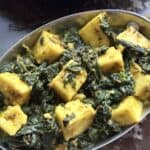
Easy Palak Paneer Without a Blender
Make this best-known Indian spinach curry, easy palak paneer without a blender in just 20 minutes! No blanching, no pureeing; baby spinach wilts directly into a spiced masala for a flavorful, homestyle palak paneer that is ready in no time. Vegetarian and gluten-free.
Servings: 4
Calories: 238kcal
Equipment
Ingredients
- 1 lb baby spinach ½ kg
- ½ lb paneer 250 g
- 1 tablespoon ghee or avocado oil
- 1 inch piece of ginger
- 3 cloves garlic peeled
- 1 green chili optional
- 1 teaspoon cumin seeds
- ½ teaspoon turmeric
- ½ teaspoon cayenne or red chili powder, optional
- 2 teaspoon coriander powder
- ½ teaspoon garam masala
- Salt to taste
Instructions
- Build the aromatic base: This rustic, easy palak paneer recipe starts with a non-stick or heavy-bottomed pan over medium-high heat. While the pan is heating up, crush 1 inch piece of ginger, 3 cloves garlic, and 1 green chili in a mortar and pestle. Add 1 tablespoon ghee (or avocado oil) to the pan, and once it shimmers, add 1 teaspoon cumin seeds. As the seeds start to splutter, add the crushed ginger, garlic, and green chili. Cook for 30 seconds or until the raw smell of ginger garlic goes away.
- Toast the spices: Stir in ½ teaspoon turmeric, ½ teaspoon cayenne, and 2 teaspoon coriander powder, then cook for another 30 seconds to lightly toast them.
- Add spinach in batches: In this step you will slowly add 1 lb baby spinach to the pan. The raw spinach might look like a lot, but trust me, it will wilt and reduce to fit in your pan. I have used a 12.5-inch pan here. You might have to do this in batches. That is: Add, wilt. Add, wilt. And so on, until all the spinach is in. Lower the heat to medium and cook the spinach, covered, for 4-5 minutes to soften it. While the spinach is cooking, cut ½ lb paneer into cubes and set aside.
- Wilt the spinach: After 4-5 minutes of cooking, uncover the pan and stir around. Your spinach should be completely wilted, and there will be some moisture/spinach juices in the pan.
- Combine and simmer: Add the paneer cubes to the spinach masala and Salt to taste. Stir gently to mix each paneer piece into the spinach masala. Cook for 5 minutes on medium-low heat, just enough for the paneer to absorb the flavors.
- Finish and serve: Check and adjust for seasonings and finish palak paneer with ½ teaspoon garam masala. Serve with roti, naan or basmati rice.
Notes
Paneer: This soft, non-melting cheese is a staple in Indian cooking. While store-bought paneer is convenient, homemade paneer is what I recommend. Store-bought versions are often firm, hard, or dry, whereas homemade paneer yields a pillowy, creamier texture that absorbs the rich flavors of the curry. It comes together easily with just milk, an acid like lemon juice or vinegar to curdle it, and a bit of cheesecloth to strain it. If you want to make your own from scratch, check out my how to make paneer post.
Ghee: This golden, nutty clarified butter is a classic cooking fat in Indian kitchens. It’s simply unsalted butter simmered until the water evaporates and the milk solids separate, leaving pure, fragrant butterfat behind. It brings a deeper, far richer flavor than standard butter and has a high smoke point that’s perfect for toasting spices. You can easily buy it at most grocery stores, make a big batch at home (it keeps at room temperature for months!), or swap in oil in a pinch.
Storage: This curry will keep well in an airtight container in the fridge for up to 4 days, though the flavors are always at their peak when served fresh or the next day. Reheat gently over medium-low heat to bring the sauce to its original glory.
Nutrition
Calories: 238kcal | Carbohydrates: 8g | Protein: 12g | Fat: 19g | Saturated Fat: 11g | Polyunsaturated Fat: 0.4g | Monounsaturated Fat: 1g | Cholesterol: 47mg | Sodium: 143mg | Potassium: 682mg | Fiber: 4g | Sugar: 1g | Vitamin A: 10744IU | Vitamin C: 35mg | Calcium: 401mg | Iron: 4mg
